
Those who know me know that going to URJ Camp Newman each summer is a big part of my family’s life. I grew up going to Jewish summer camp, Camp Swig z”l. Rick and I both worked at Swig together as college students. And our sons have grown up at Camp Newman as well.
The beauty of Jewish summer camp is that our children – and we – always learn new things each summer. We make new friends (and keep the old). We learn about Judaism. We learn about ourselves. We learn about life. We reconnect.
It seems like each summer I return home with a list of things I learn and hear about and want to bring home with me to explore more deeply. This year’s list is a bit random (and perhaps slightly inappropriate).
Movies to watch, music to check out, and of course the latest slang that I need to investigate (more on that to come soon).
But, in reality, I come home with life lessons that I probably really do know but somehow forget each year as I get stuck in the routines and ruts of life. Camp reminds and reboots. This summer, I am refocused on three lessons:
1. Give snaps. Sitting around a circle of high schoolers studying a text or discussing their opinions on an ethical issue, when a teen says something that others agree with, they give her snaps. They snap their fingers. A snap means, “I like what your are saying.” “I agree.” or even if one doesn’t agree, “I support your courage to speak up.”
I like this minhag (custom) because it creates a supportive environment for everyone to say what they think or feel without fear of judgement or rebuke. It creates safety and respectful exchange of opinions.
And, as an adult to sits in way too many long meetings, it provides a venue for one to express agreement without repeating the same idea over and over again. Sometimes adults feel the need to say things just to hear their own voices. Our teens just snap instead.
2. Be silly. Be joyful. No matter how old we are, our inner child comes out at camp. We let go of the what-will-pepople-think inner dialogue and just go with the flow. What emerges from that is childlike joy and silliness, deep belly laughter that invigorates and revives the soul. 
3. We are stronger when we hold each other up. One of my favorite things to do each morning at camp is Israeli folk dancing. A number of us began a couple years ago dancing regularly for exercise. You’d be surprised how many steps you get in during 45 minutes of folk dancing. This summer we had a new member join our morning exercise dance group. On our second morning of dancing together she said, “I am so surprised you don’t hold hands when you dance together. When we hold hands, we are stronger and we hold each other up.”
Granted, we don’t look at all like this when we dance, but her lesson is so true. At camp, we learn that we are stronger together. We hold each other up as a community, as a family, as friends. That strength carries us through the rest of the year.
Were I still at camp this Shabbat, right now I’d be putting on my Shabbat whites, getting ready to sing Shir Chadash, eat Tammy’s delicious chicken, and dance the night away on the basketball courts with my Camp Newman family. Instead, Rick and I are going to have a quiet Shabbat dinner and join our TBI Fresno community in Shabbat worship (also a good thing!). Yet, I carry with me the memories, the laughter and the lessons I learned this summer at camp.
 My Mother’s Wars is Lillian Faderman’s portrayal of her mother’s experience as a single woman struggling to survive in the New York garment industry as her Latvian family across the ocean struggles to survive growing anti-Semitism and the impending Holocaust.
Dr. Lillian Faderman is a long time resident of Fresno. I recently had the honor of meeting and getting to know her. A retired professor of English at Fresno State, she was a trail blazer for women entering academia in the 1960s and 70s. She was a trail blazer in developing the fields of Women’s Studies and Gay Studies. I am told by my lesbian friends that her books on lesbian history are required reading for any woman in the process of coming out.
This book is very different though. It is personal. Lillian tells, with “emotional truth” the story of her mother’s experience as a poor immigrant in New York City who not only struggles to survive on her own, but also struggles to save her family back in Latvia. As we approach Yom HaShoah, Holocaust Remembrance Day, My Mother’s Wars offers a perspective on the Holocaust that is timely and issues an ethical call for today.
I am sure that Lillian did not intend for My Mother’s Wars to be a book primarily about the Holocaust. She wrote the book as a means of understanding her mother’s life and the choices that ultimately led her to become the strong, troubled, all-loving mother that she was. Yet, for those of us who can view Mary’s life from the outside, Lillian gives witness to the experience many of our families lived and endured. Watching and waiting, in pain and sorrow, feeling helpless as family members across the ocean fought a too-often loosing battle for survival.
Through My Mother’s Wars we see the power of the media, film and print. We see the impact those media portrayals had on Americans’ understanding of the war and the Third Reich. Each chapter begins with “Time on the March”, excerpts from real-time newsreels and newspapers. As we read the transcripts of the newsreels Mary would have seen each time she went to the movies, we are transported to that time and place. We feel the increasing tension in Germany and Eastern Europe. We read of the United States’ reluctance to get involved. And from these emotionless news clips Lillian leads us into Mary’s own experience as she palpably feels the helplessness and impending doom to befall her family.
For Mary, it sometimes took months to get news from her family. Footage shown in the movie houses was sometimes weeks old. But for us today, in the age of Twitter and live-streaming, we receive news as it is happening. One might rationalize that back in the 1930’s-40’s we didn’t really get the full story of what was happening. (Though I wouldn’t…) But today we do not have that excuse.
We live with memory of the human rights failures of many countries, political and religious leaders, who stood idly by while Hitler and the Nazis devastated thousands of communities, murdering 6 million Jews and millions of Soviets, Poles, homosexuals, people with disabilities, Jehovah’s Witnesses and others.
Today, when we say “never again”, we have no excuse to ignore human and civil rights violations happening in our world, in our back yards. Whether it is battles over civil rights here in the US, genocide in Sudan or Congo or crimes against gays and women in Uganda, the news is IRL, in real life and in real-time.
This Yom HaShoah, I remember Lillian’s family and all those who were lost in the Holocaust.
This Yom HaShoah, I hear the call to justice and action. To take a stand against the evil and hatred that still exists in the world.
This Yom HaShoah, I pray that we can create a world in which all people can live in fullness of life, in safety, in love and in peace.
Check out Jewish World Watch.
I really struggled with my Passover preparations this year. Now that it’s over, I can say that. Not only was I busy, busy, busy and had trouble finding the time to do the rigorous cleaning I like to do, but I also had a deeper spiritual challenge with it.
 Traditionally, Jews are supposed to clean their whole house of bread crumbs and any signs of chametz (leavening) prior to Passover. Nothing is to be left in the house.
Each year as Passover approaches, I make the time to clean out the refrigerator, the freezer and the pantry. I try also to do a really thorough cleaning of the cupboards in the kitchen. We don’t have separate dishes or cookware for Passover, but I make a concerted effort to make our kitchen feel like its Passover. I take any unopened or salvageable chametz out to the garage freezer and store the dry goods in boxes for the week. And I get my car washed – inside and out.
Some in my family think that it is silly to move all the food around. Why go through the hassle of shlepping it out and then back in a week later? Well, in our previous homes I really needed to empty the pantry of chametz in order to make room for the boxes of matzo and Passover foods.
Since moving to Fresno, though, we have been blessed with a VERY LARGE pantry. It is the size of a walk-in closet. There is plenty of space for lots of food, my wine collection, storage etc. It just doesn’t make sense to move so much food out of this generous space, when I could simply put it to one side. So that’s what I did last week.
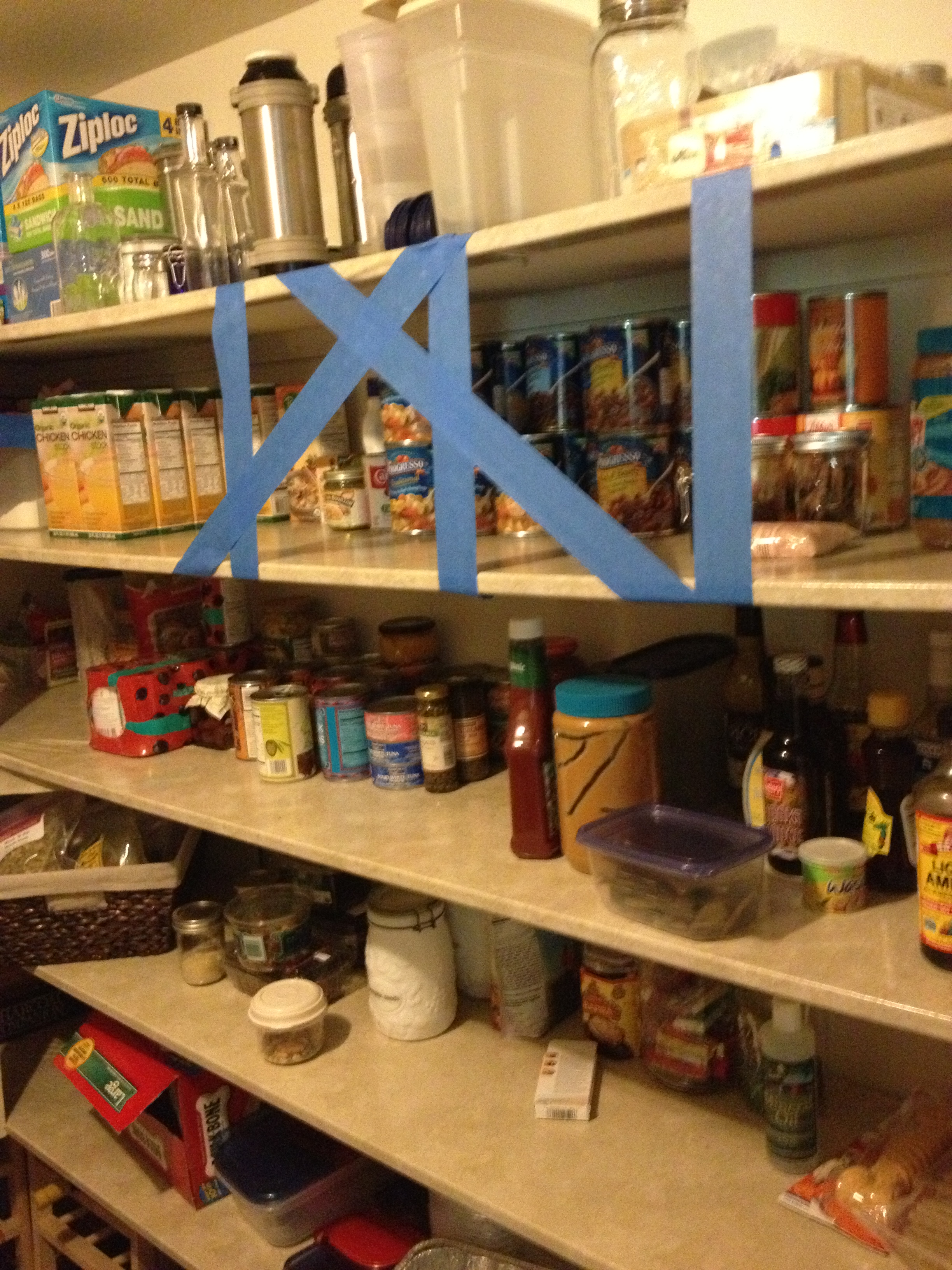
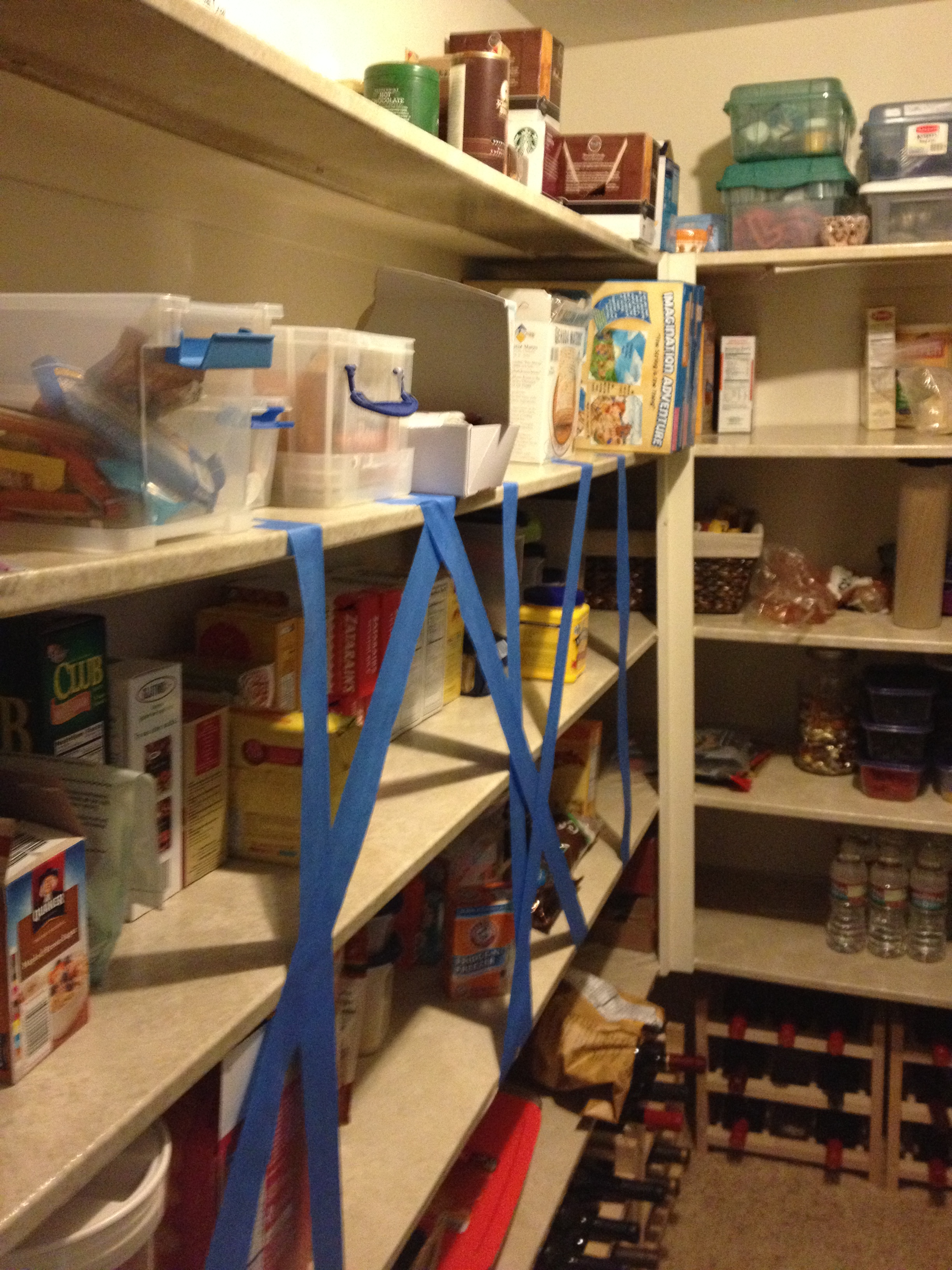
At first I really struggled with this plan. I felt a bit guilty. Was I becoming lazy? Was I letting go of that important aspect of Passover, cleaning out the chametz?
At the seder we talk about the metaphorical meaning of chametz. Chametz – the stuff that puffs us up and fills us with self-importance. Chametz – the stuff that blocks our ability to move forward as our true selves. Chametz – the stuff that holds us back or weighs us down.
As I organized the pantry, moving chametz to one side and making dedicated space for the Passover-friendly foods, I realized, the chametz isn’t really going anywhere. Chametz it always there – literally and metaphorically. Its how we deal with its presence in our lives that counts.
Each time I went into the pantry this past week, I would see it, acknowledge its presence, and then move on to what I was really in search of. By keeping the literal chametz in my pantry, and blocking it off, I created for myself a spiritual exercise in learning how to push the metaphorical chametz aside as well.
This morning I took all the tape down. Chametz, free for the taking. Pretzels and crackers, oatmeal and Girl Scout cookies. All those yummy baked goods are back. Does that mean we have to let the metaphorical chametz back too? It might be there, but we don’t have to take it back in.
This Passover I learned that chametz will always been in my life. Its inevitable. But now I know, I don’t have to always let it control me. I can acknowledge its presence and push it aside, moving onto what I am really searching for.
What do you say to your kid when…?
This was a frequently asked question last night at Congregation Or Ami’s Center for Jewish Parenting program on talking with your kids about sex and sexual ethics where I had the honor of being the guest teacher.
What do you say to your kid when he asks what you did when you were his age?
What do you say to your 13 year old before she heads off to sleep-away camp for the first time?
What do you say to your daughter when she sees something overtly sexual on TV that perhaps she doesn’t understand?
What do you say to the carpool kids in the back seat of the car when they are talking about whose hooking up and whose “doing it”?
What do you say to your son when he asks, “How do I know when I am ready to have sex?”
Such hard and scary questions. Such real questions. We’ve all been there as parents, aunts, uncles, go-to-adults in the lives of our youth. And if we haven’t been there yet, we inevitably will be.
As I guided this group of sensitive, open-minded, and eager-to-find-guidance group of parents through our conversation about Jewish values and Jewish sexual ethics, we came to some really important understandings about navigating our way through this part of parenthood.
1. There are no cookie-cutter answers to any of these questions. Answers come from our own hearts, from our understanding of the role that Judaism plays in our lives, from our articulation of what we believe and what we want our children to hold as their beliefs. As one parent succinctly put it: My response to my child always begins with “this is what our family does.”
2. Answers are based on what a child is ready to hear and ready to understand. Listening to their verbal cues and observing their reaction is important. One parent shared her experience of reading a book with her daughter about relationships and sex. She said to her daughter, “We will read this together each night. We will read as long as you feel comfortable. Once you’ve said ‘awkward!'(said in that adolescent lilt) three times, we will stop for the night.” Slowly, but surely, they made their way through the book together, had meaningful conversations, and did it at her daughter’s pace.
3. As my colleague Rev. Debra Haffner has said, it’s not about the “big talk.” It’s about laying a foundation in which our kids know that the door is always open for conversation. When we build relationships with our children that are open to dialogue and safe conversation, our kids are more likely to come to us with their questions and concerns. This begins when they are very young and God-willing will continue throughout their lives.
4. Sometimes the best answer to a question is a question. How rabbinic. Rather than pontificating or giving hard and fast answers that shut down conversation, we should help our kids explore and understand their own questions. What are they really asking? What do they think? How do they feel? In this gentle way, we guide and teach our kids to hear what their own inner voice is telling them. When we do this, we give our kids the skills they need to listen to that inner voice that will always be with them – even when we aren’t.
5. Always say “I LOVE YOU.” No matter what the question, no matter what the dilemma our kids face, we must always, always let them know that we love them, and will always love them. Our kids will make mistakes. They will have regrets. Knowing that we are always there for them, that we will always love them – no matter what those mistakes – is vital for their growth and development into healthy, strong self-sufficient adults.
This week I have been sitting in NATE Leadership Team meetings with dear colleagues, treasured friends, and respected educators in our Movement. I have been learning and thinking a lot in these meetings this week. Learning and thinking about ideas big and small. 
I always learn more about the passion my fellow Jewish educators have for their – our – work and how we realize that in our institutions. We recommit ourselves at these meetings to this incredibly valuable organization and the vital work we do on behalf of Jewish educators and Jewish education.
I’ve learned about an amazing congregation in suburban Chicago that has been hosting us this week. The leadership of BJBE is leading the way in our Movement’s efforts in creating intentional sacred space and engaging its members in meaningful Jewish living.
Rabbi Kedar taught me a new way of thinking about Judaism. Her short shiur (lesson)/tour of the building left me with this thought
In Judaism, asking the question is more often significant than the answer. What’s your big question that guides your life?
I’m contemplating this one a lot today!
Intentional is an appropriate word to describe the NATE leadership’s deliberations. We are guided by our mission, vision and values. We have strategic goals that we check-in on regularly. We make decisions by consensus. Our conversations are thoughtful, careful and especially respectful.
On a less existential note, I’ve learned some tricks for tweaking my blog. Watch for changes coming soon. And I’ve learned to make my own word cloud on tagxedo.com, which is super fun.
It is always a lot of fun to spend time with colleagues and friends at these NATE Leadership meetings. Overwhelmingly though, it is a great honor to participate in the leadership of NATE and be part of the voice of Jewish education in our Movement.
Granted, I’ve seen what’s behind the curtain of NFTY Convention. This was the first convention in 13 years that I was not apart of planning and staffing. NFTY Convention is a magical experience. Thousands of hours go in to creating the weekend. NFTY staff practically give up their lives for close to a year to make the magic happen for our kids.
This weekend I had the opportunity, the blessing, of experiencing Convention much like 800+ other parents around North America – via text messages from my son, emails from the NFTY staff, trolling through pictures posted on Flickr and Instagram, reading tweets, and watching the live video feeds. (You can’t accuse NFTY of being behind the times in terms of technology!)
While you might think I had a severe case of FOMO (fear of missing out), I actually didn’t. I enjoyed being home, relaxing with family, sleeping in, having hot water in my shower each morning.
 Instead, I basked in the glow of Max’s amazing experience. He returned home today exhausted yet energized. He returned home with so much more than he left with on Friday morning.
He made new friends and reconnected with old ones, including his best friend from preschool whom he now only gets to see very infrequently because they live 2000 miles away from each other.
He was inspired by teens who are making a difference in the world, especially Talia Leman, founder of Random Kid. Max bought her book and began reading it on the train ride home.
He connected with other NFTYites interested in song leading; they discussed challenges and techniques for successful leadership in the worship experience. He experienced model song leaders and musicians like Dan Nichols and Josh Nelson.
Teachers tapped into his desire for serious Jewish learning. “I wish there had been more midrash study in that session.” How many times do we hear our kids say that?!
His tweets included “couldn’t ask for a more fun night”, “sweet words of Torah #nftyconvention,” and “#nftyconvention is the only place accordion is acceptable.” And my favorite, “EIE students in Israel on Kibbutz Tzubah. Hopefully I’ll be there soon.”
My response: it’s working!
NFTY works.
NFTY inspires our kids to think about who they are and who they want to be.
NFTY allows our kids to be themselves, without fear of teasing or being ostracized
NFTY gives our kids role models and peers whom they can trust, emulate, learn with and from, and simply have fun.
NFTY makes Judaism relevant and real and alive.
Thank you Melissa, Subie, Beth, Scott, and everyone else who made this NFTY Convention such a memorable experience for Max. As his mother, I am grateful.
I don’t actually know George Brown, but he appears to be a pretty good guy here in Fresno. You see, George Brown owns several gyms here in town, GB3.
 A new GB3 opened very close to our home. I clocked the drive today. At 5:15 PM, presumably the height of rush hour, I was able to drive from our home to the gym in 6 minutes. When the gym opened last month I urged Rick and Max that we should join. Not only is it is conveniently located, but it is really affordable, Max can go on his own without a parent present, and they have all usual gym equipment and classes, including a lap pool. It is clean and new. It is inviting. And it doesn’t feel like a meat market, if you know what I mean.
I have been experimenting with going to different classes and going at different times of the day. So far I love the spinning classes – there is always a bike available. And even though it is the busiest time of day, I like going in the evenings.
Evenings are family time at the GB3. I walk in and I see children and parents – and even grandparents – working out together. Mothers and daughters in Zumba classes. Two generations walking on side-by-side treadmills. Fathers and sons spotting each other at the weight machines.
Evenings at the gym also show the diversity and multiplicity of cultures and religious groups that is Fresno. Hispanics, Armenians, African Americans, Sikhs, Hmong, Caucasians, and the occasional Jew (that would be my family) – we are all at the gym together. Side by side. Getting healthy – or at least trying.
Yes, there is an epidemic of obesity in this country. I see that too at the gym. Yet, each evening as I get back in my car after a good workout, I have a sense of hope. Families that workout together, that get healthy together, are making an effort to put an end to that epidemic.
Thank you George Brown for making it affordable and easy for that to happen.
Last week the BJE: Builders of Jewish Education in Los Angeles, CA announced the establishment of a new summer program in Israel for high school teens, Epic Israel. I am honored and excited to be the program leader for this trip. You might think its crazy that I would want to spend 4 weeks in Israel with a group of 16-18 year olds. But here’s why I am looking forward to this trip!
Our tagline for the trip is:
Your first trip to Israel should be epic, right? Thanks to Epic Israel, it will be!
Ask any adult who participated in a trip to Israel as a teen, or any teen who has recently returned from a trip, and you will hear how memorable and transformative (read: epic) an experience they had. Individuals who travel to Israel on teen trips return home with stronger friendships, stronger connections to Israel and stronger connections to Judaism. Such expressions of transformation are not just anecdotal. Research has shown that there is a “correlation between participating in an Israel trip and strengthened indicators of Jewish identity.” (For those interested in learning more about this research on Israel Experiences check out “The Israel Experience” from The Aleph Bet of Israel Education developed by The iCenter.)
What is it about being in Israel that leads to this impact? It is Israel itself. The Israel Experience allows that which was only previously accessible through words on a page or pixels on a screen to come to life. The Israel Experience gives participants the opportunity to learn about Israel in Israel – to see the sites, the people, the historic and the modern, to learn in a manner only feasible when standing in there in real time and place. 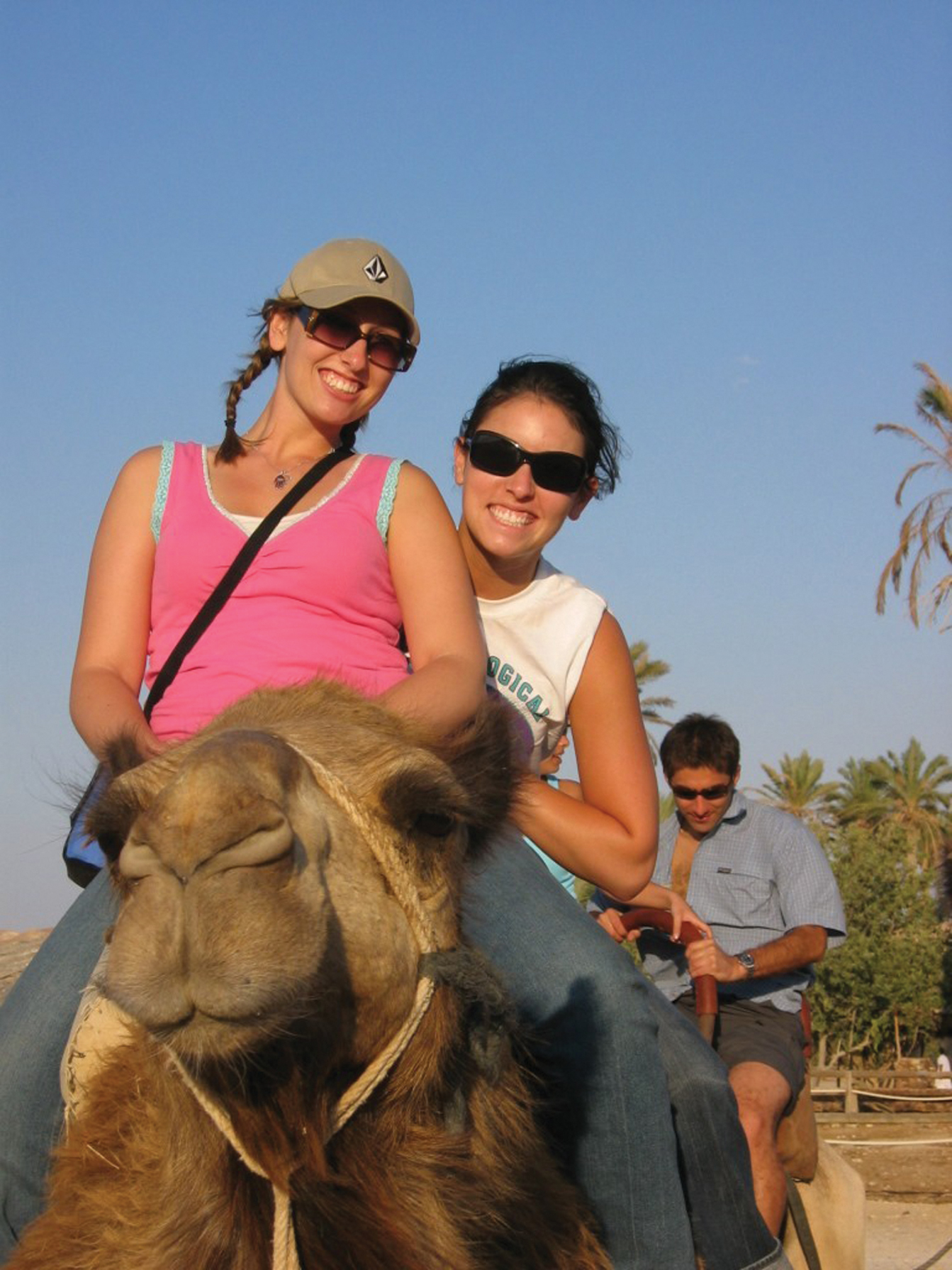
When we are in Israel we can stand at the place where Abraham stood when God told him to take Isaac up to the mountain to sacrifice him. When we are in Israel we can walk on the same cobblestones our ancestors traversed when bringing their goods to the ancient markets in Jerusalem. When we are in Israel we can sit on the shore of Lake Kinneret, reading poetry of the early 20th century poet Rachel. When we are in Israel we can experience the art, the music, the flavors, the vibe of the country in real time rather than through YouTube or the Food Network channel. When we are in Israel we can meet, connect, dialogue and learn with Israelis who embody the joy and challenges of life in the Jewish State each and every day.
Why a teen Israel Experience? With that experience, our teens learn about Israel. With that experience, our teens learn about themselves and what Israel and Judaism means to them. With that experience, our teens explore their personal identity and come to see themselves as part of the ongoing story of the Jewish people.
Epic means memorable. Epic means legendary. Epic means transformative. Our teens who participate in Epic Israel will come home saying, “That was epic!” And they will mean it.
“He’s just a kid trying to be a man.”
How many of us have said that about our own children or the young people we know?
I am not an avid follower of the tabloid scandals. I could care less who is dating or broke up with whom, or who is someone else’s baby mama/daddy. But for some reason I have been focused on the Manti Te’o story that has filled our news feeds for the past couple weeks.

For those who have been sleeping under a rock, Manti Te’o is the star University of Notre Dame senior football player who has been the alleged victim of a cruel hoax in which he developed a relationship with a young woman who never actually existed. According to Te’o, they never met in person and their relationship existed online and over the phone. Today Katie Couric aired an exclusive interview with Te’o and his parents in which viewers get their side of the story. (BTW, I don’t usually watch daytime TV either. I TIVOed this one.)
Brian Te’o, Manti’s dad, articulated from a place of love exactly what I had been thinking about his son. “He’s just a kid trying to be a man.”
I remember being a young woman in deep like – or maybe even in love. I remember talking on the phone so late into the night that we both fell asleep with the phones to our ears. I remember being so blinded by the romance and the idea of love that I couldn’t see the warning signs that perhaps he wasn’t a good person for me or to me. I remember feeling so grown up when romance was part of my life.
And I’ll admit that I even lied to guys once or twice in order to gain their sympathy, attention, affection.
Manti’s story of young love is all too real.
I also think the reason why I have been so drawn to Manti’s story is because we are witnessing a public figure allegedly (how many times do I have to use that word?) experience something that happens far to often and is probably symptomatic of the time and culture in which we live.
Teens and young adults play pranks on each other. We did it back then. They do it now. Sometimes it is funny. And sometimes it turns out very hurtful.
The official term for what allegedly happened here is catfishing. According to Urban Dictionary
A catfish is someone who pretends to be someone they’re not using Facebook or other social media to create false identities, particularly to pursue deceptive online romances.
Manti didn’t break any laws. If we find out that he was a perpetrator of this hoax, at the most what he did was unethical and stupid. Regardless of his role, Manti was a scared young man who wanted the approval of his peers and the love of his parents. When faced with an overwhelming situation, he didn’t know how to handle it.

The saddest part of this story for me is that for Manti, this relationship was real. Even though the relationship was a hoax, and he an alleged victim, for him the feelings were real. He felt the love and the pain. The grief and now the shame.
As a mother of teen and young adult sons who are learning their own ways through the winding paths of love and relationships, I wonder…
How can we do a better job of teaching our youth to navigate their relationships?
What should we be doing to teach youth the boundaries between healthy fun and hurtful pranks?
What can I do as a mother, rabbi and Jewish educator to assure my sons & my students that no matter how scared, how embarrassed, or how overwhelmed they are, I am here for them? My love and support will be constant. I will help guide them out of the challenges, the pain and the shame.
Rick’s driving, Laura’s navigating and Paul’s typing.

Rabbis Paul Kipnes (Congregation Or Ami, Calabasas), Rick Winer (Temple Beth Israel, Fresno) and Laura Novak Winer (Jewish Educational consultant) drove in minivan for the ride back home from the Pacific Area Reform Rabbis (PARR) conference in Palm Springs, CA.
- Studying with scholar Melila Hellner-Eshed of Israel’s Hartman Institute. We explored applications of Kabbalah’s Zohar text to Jewish healing for individuals, rabbis and congregations. It sounds really esoteric but rabbis get into that stuff.
- Meeting with Israel’s Consul General David Siegel who updated us on the latest behind the scenes news from Israel, including issues of religious pluralism, women’s equality, and the security situation with surrounding countries.
- Dialoguing with new president of the Union of Reform Judaism, Rabbi Rick Jacobs, whose presence underlined the importance to the URJ of connecting with West Coast Reform leadership. Rabbi Jacobs spoke eloquently about the far-reaching moves to transform our national organization into a nimble, flexible, responsive and effective movement.
- Organizing Reform Rabbis (and congregations) into Reform CA, a unified Jewish religious voice on issues of concern in California. We energized each other as we recognized that our values should have a voice in the public sphere.
- Kvelling about the continued growth and efficacy of our Movement’s Camp Newman which engages over 1,400 Jewish kids each summer. We reviewed the master plan for the transformation of the physical space to deepen our educational and religious program.
- Sharing collegiality where we could pray, support and laugh with others whose experiences can offer wisdom and guidance as we continually deepen our rabbinates.
- Benefitting from private one-on-one consultations with rabbinic coaches, CCAR Chief Executive Rabbi Steve Fox, our URJ District Rabbi, Point of Contact, and Specialists.
- Studying with Hebrew Union College-Jewish Institute of Religion, Los Angeles Campus Dean and Professors as well as students, which provided insights into best practices and new ideas.
- Finally, hiking through Indian Canyon Indian Reservation provided gorgeous vistas, healthy exercise and meaning conversations with close friends.
 Rabbi Laura